Adam and I watched Mamma Mia together three days ago. (I should have posted about it then, but I haven't been feeling very well. Apologies.) Just as I was when I saw the touring show and when I saw the movie the first time, I was again conflicted about the musical's dubious message about marriage.
In the musical, a young bride-to-be invites the three men who might be her father--none of whom she has ever met--to her wedding. Hilarity ensues. At the musical's climax, the protagonist finds herself satisfied with her family background. Her wish to find her family is fulfilled. So she cancels the wedding. She and her fiance won't marry now--they'll see the world together first.
Adam insists that they may well have made the right decision. She was using marriage to fill a whole in her life that she needed to fill some other way. Besides, they're young and may not be ready to spend their lives together yet. After all, he reminds me, we did important things with our lives and put off marriage for three years. People shouldn't rush into marriage.
In a way, I guess he's right. Marriage isn't a decision to take lightly or to rush into. But still, I think the musical portrays a destructive image of marriage. The hero and heroine don't want to go out and follow their dreams separately for a few years, as Adam and I did. They want to explore the world together--but they seem to think of marriage as some sort of impediment. Marriage, to them, seems to be a kind of kill joy, a choice to settle down and stay home after the adventures of youth are over.
That's not how I was raised to think of marriage. My parents have always insisted that marriage is its own adventure but, more than that, their married life has been actively exciting. They've traveled. They've run for public office. They've met the who's who of the Deep South. But the difference between my parents and the couple in Mamma Mia is this: my parents have sought and met adventure as a team. The hero and heroine of the musical go out into the world as separate individuals seeking the same adventures; my parents have done and do it as a single entity with a shared story to tell.
That's what I want for my marriage, too. I'm not ready to give up my adventure--though some might accuse me of being less adventurous than most. I'm ready to join my adventure to Adam so we can pursue our lives, our dreams, our vocations together.
Showing posts with label vocation. Show all posts
Showing posts with label vocation. Show all posts
Monday, July 13, 2009


Wednesday, July 8, 2009
The Ideal of Marriage?
I spend so much time on my blog talking about the ideal of marriage, the meaning of marriage, and the significance of marriage that I sometimes forget about what marriage--and relationships headed in that direction--actually look like. We're a fallen people in a fallen world. The ideal of marriage is an aspiration, not an achievable reality. It's easy to aspire to an ideal when your boyfriend is an ocean away, but somewhat harder when your fiance is in the room with you.
Take today for example. Adam and I set buying wedding rings as our daily goal. What started as an innocent internet search for DC-area jewelers turned into a senseless argument about how we ought to make decisions. When we took a few minutes to cool off before we sat down to talk about what happened, I couldn't help but think Is this really us? Is this the best we can do? I thought marriage was our vocation--why is this happening?
In the end, we learned a valuable lesson about listening and about communicating our expectations to each other. But, more than that, I learned something about ideals. I can't get upset when we fall short of them. It's going to happen. A fight doesn't mean we're not called to married life. It just means we're not perfect. And making up, reaching a compromise, loving each other anyway--these are special blessings in marriage for a fallen people.
Take today for example. Adam and I set buying wedding rings as our daily goal. What started as an innocent internet search for DC-area jewelers turned into a senseless argument about how we ought to make decisions. When we took a few minutes to cool off before we sat down to talk about what happened, I couldn't help but think Is this really us? Is this the best we can do? I thought marriage was our vocation--why is this happening?
In the end, we learned a valuable lesson about listening and about communicating our expectations to each other. But, more than that, I learned something about ideals. I can't get upset when we fall short of them. It's going to happen. A fight doesn't mean we're not called to married life. It just means we're not perfect. And making up, reaching a compromise, loving each other anyway--these are special blessings in marriage for a fallen people.
Tuesday, July 7, 2009
Beatrico
After a brief hiatus in Georgia to pick up the new car (aka "the Millenium Falcon"), ...and Enide is back...
Over the past few days, Adam and I have found ourselves re-exploring Dante's Divina Comedia. Both of us read The Inferno in high school, but neither of us has ever explored the rest of the three-part poem in depth. I'm only now realizing how deprived I've been.
In The Inferno, Dante finds himself alone in a dark wood. Virgil (of Aneid fame) finds the frightened Dante and proposes that they both undertake a most surprising journey--through hell, past purgatory, into heaven. Virgil guides him through the nine circles of hell, protecting him from demons and monsters, until they escape hell and begin to climb the mountain of purgatory. Again, Virgil prove himself a loving and powerful guide through purgatory. At the gates of heaven, the pagan Virgil leaves Dante in the care of Dante's beloved Beatrice.
The first time I read the poem, I focused on Virgil. Virgil is Dante's guide in his imaginative realms of hell and purgatory, as well as a literary guide for the writing of the poem itself. I've only gradually realized that to pay attention only to Virgil--even in The Inferno and Purgatorio--is to completely miss the point. Beatrice is Dante's guide in the poem, and in his life, whether she is present or not.
In my own defense, I think I lacked the context to understand Beatrice's role when I read the poem as a Protestant. She's Dante's intercessor, the one who brings his cause before heaven. It's a role saints like Beatrice can only play when we accept the communion of all believers, living and dead. Even in the darkest pits of hell, Beatrice sends Dante help and hope.
But Beatrice is far more than intercessor. She's an active guide in Paradiso, but also in The Inferno and Purgatorio, as well as in the whole of Dante's life. Her name itself--meaning "bringer of gladness"--takes on an allegorical meaning. She is the person in which Dante sees God. She's no false idol for Dante, but a presence that makes him feel irradiated with God's love. Dante sees God in Beatrice. Thinking about her, writing about her, striving to reach the heaven in which she resides--all these things draw Dante closer to God. Her role as guide through heaven is the perfect allegorical fulfillment of her role in Dante's life.
That's a role I never understood until I fell in love. Adam is my "Beatrico." In his love, I feel God's love for me shining through. Adam's goodness and compassion give me a model for behavior, but by themselves draw me closer to God. He's not just my fiance and won't just be my husband. He's also a walking allegory, a representation of what God's love looks like and feels like. That's why I feel so strongly called to the vocation of marriage--the love of the man I hope to call my spouse draws me further up in and further in to God's love every day.


Over the past few days, Adam and I have found ourselves re-exploring Dante's Divina Comedia. Both of us read The Inferno in high school, but neither of us has ever explored the rest of the three-part poem in depth. I'm only now realizing how deprived I've been.
In The Inferno, Dante finds himself alone in a dark wood. Virgil (of Aneid fame) finds the frightened Dante and proposes that they both undertake a most surprising journey--through hell, past purgatory, into heaven. Virgil guides him through the nine circles of hell, protecting him from demons and monsters, until they escape hell and begin to climb the mountain of purgatory. Again, Virgil prove himself a loving and powerful guide through purgatory. At the gates of heaven, the pagan Virgil leaves Dante in the care of Dante's beloved Beatrice.
The first time I read the poem, I focused on Virgil. Virgil is Dante's guide in his imaginative realms of hell and purgatory, as well as a literary guide for the writing of the poem itself. I've only gradually realized that to pay attention only to Virgil--even in The Inferno and Purgatorio--is to completely miss the point. Beatrice is Dante's guide in the poem, and in his life, whether she is present or not.
In my own defense, I think I lacked the context to understand Beatrice's role when I read the poem as a Protestant. She's Dante's intercessor, the one who brings his cause before heaven. It's a role saints like Beatrice can only play when we accept the communion of all believers, living and dead. Even in the darkest pits of hell, Beatrice sends Dante help and hope.
But Beatrice is far more than intercessor. She's an active guide in Paradiso, but also in The Inferno and Purgatorio, as well as in the whole of Dante's life. Her name itself--meaning "bringer of gladness"--takes on an allegorical meaning. She is the person in which Dante sees God. She's no false idol for Dante, but a presence that makes him feel irradiated with God's love. Dante sees God in Beatrice. Thinking about her, writing about her, striving to reach the heaven in which she resides--all these things draw Dante closer to God. Her role as guide through heaven is the perfect allegorical fulfillment of her role in Dante's life.
That's a role I never understood until I fell in love. Adam is my "Beatrico." In his love, I feel God's love for me shining through. Adam's goodness and compassion give me a model for behavior, but by themselves draw me closer to God. He's not just my fiance and won't just be my husband. He's also a walking allegory, a representation of what God's love looks like and feels like. That's why I feel so strongly called to the vocation of marriage--the love of the man I hope to call my spouse draws me further up in and further in to God's love every day.
Monday, June 29, 2009
Male and Female He Created Them
Sexuality affects all aspects of the human person in the unity of his body and soul. It especially concerns affectivity, the capacity to love and to procreate, and in a more general way the aptitude for forming bonds of communion with others.There is a beautiful George MacDonald story called The Myth of Photogen and Nycteris. In the tale, the witch Watho abducts two young children--a boy and a girl. She raises the boy to be strong and fearless, but to never encounter the dark. She raises the girl to be wise and calm, but to never see light brighter than a small globe in her otherwise pitch-black room. Eventually, the two discover each other and make a daring escape from the witch's kingdom. It takes all of their shared talents and virtues to make the journey alive.
Everyone, man and woman, should acknowledge and accept his sexual identity. Physical, moral, and spiritual difference and complementarity are oriented toward the goods of marriage and the flourishing of family life. The harmony of the couple and of society depends in part on the way in which the complementarity, needs, and mutual support between the sexes are lived out.
"In creating men 'male and female,' God gives man and woman an equal personal dignity." "Man is a person, man and woman equally so, since both were created in the image and likeness of the personal God."
Each of the two sexes is an image of the power and tenderness of God, with equal dignity though in a different way.
--Catechism of the Catholic Church
The story is, on top of being a brilliant tale in its own right, a poignant allegory for the relationship between men and women. Photogen is deeply involved in the world, strong, able to take care of Nycteris. Nycteris is my retired, thoughtful, but able to get Photogen through the darkest nights and his deepest fears. As a child, I loved that image of cooperation, love between two perfect equals necessary for each others' completeness. As a grown woman, soon to marry my own Photogen, I find the story even more compelling.
Perhaps that's why I was deeply disturbed to hear a Catholic priest recently questioning the idea that men and women have separate but complimentary virtues. That idea has been so fundamentally important to me as I've learned to accept and then love my identity as a woman. I don't want to go back to defining my worth by how well I embody the virtues I admire in men: strength, directness, assertiveness. Those aren't my virtues--when I tried to pretend they were, the only made me unhappy and disliked. But, if they aren't male virtues, why did valuing them feel so fundamentally wrong?
The priest's claim was that language about complementarity has only come into the Church's teaching during the past fifty years or so. As he frames it, the emphasis on men and women's separate virtues is a reaction to the feminist revolution--a resurgence of conservatism on the part of the Catholic Church. "I don't remember this kind of wording from my childhood," he said. Another priest corroborated. In a few days of searching, I haven't been able to find a single document that solidly proves them wrong. Even the texts cited in the Catechism (quoted above) all post-date Vatican II.
But what if the priest's causation is wrong. What if the emphasis on male and female virtue isn't a conservative redefinition? The Chuch didn't strongly assert the Oness of the Trinity until it was denied by the Nestorians. And it didn't clarify the two natures of Christ until the Monophysites challenged it. The Church only stands up to declare something true once someone else claims it is false. Otherwise, the Church usually takes the truth for granted.
What if, then, the new emphasis of male and female virtue is another case where the Church has stood up to say, "Wait. This is what we've always believed!"? What if the Church is warning us about the loss of a fundamental perception of ourselves that has always been our privilege and our right? What if complementarity--the truth of men and women being created by God as perfect physical and spiritual pairs--is true at so basic a level that no one ever bother up to defend it until it was challenged?
I don't know if I'm right. I don't know if I've bought into a reactionary conservative redefinition of my sexuality that encourages me to accept domination and control. But I do know that this image of femininity, that I am a Nycertis naturally equipped to love my husband and children, makes me feel more liberated and happy than the idea that I had to force myself to be like a man ever did. No two human beings have the same set of virtues, but I'll continue to work toward the compassion and love that I believe are the special aptitude of my sex
Wednesday, June 24, 2009
Real, Live Fiance
I picked Adam up from the airport on Monday night. I hadn't seen him in person in nine weeks, twelve hours, and about thirty minutes. But he's here now and--as far as any of us are able to foresee--here to stay...
Despite the hypocrisy of my position, long distance relationships still aren't something I condone or encourage. They turn your beloved into two separate, sometimes irreconcilable people. I'm engaged to two Adams: a flat, distant, sometimes Adam and a very real, dynamic, right-here Adam. Every time I see him, I have to bring the two together, like trying to force double vision back to the way it belongs in the middle of a bad headache. The experience isn't now and never has been pleasant.
Flat, distant, sometimes Adam has his advantages. It's difficult to get into a serious argument with him. It's easier to get things done--like writing regular blog posts--when I only spend an hour a day with him. And when we've spent the other twenty-three hours apart, it's often easier to come up with things to talk about.
Most of all, though, it's easier to put myself before sometimes Adam. I decide how important it is to talk to him. If I'm tired or if I've got something I'd rather do, we don't talk. I have more self-determination about the way I spend my time. I set priorities differently when Adam isn't around to set him first.
It isn't that right-here Adam is controlling. Far from it. It's that, without him around, there's no presence to constantly remind me to put other people first. I'm more selfish when he isn't around. If my vocation is to marriage, being in a relationship where marriage is the ultimate goal enriches who I am, makes me want to be a more loving person to him and everyone I meet. It's just that constant, self-imposed moral pressure like that is a little difficult to get used to every time we've been apart.
There are other benefits to right-here Adam, too. Right-here Adam can hold me and kiss me. He can make me feel loved and appreciated in ways sometimes Adam never, ever could. He can be a helpmate--he spends so much time reading with me, helping me cook, comforting me when I'm sitting in traffic... These are things sometimes Adam just isn't capable of.
So, in the end, I always have to remember that I love both Adams. The fun, witty sometimes Adam I talk to on the phone and the deeper, more loving Adam I see in front of me now every day. It's just that right-here Adam is more dynamic, more human. I'm very grateful for that and look forward to spending the rest of my life with a guy of his depth.
Despite the hypocrisy of my position, long distance relationships still aren't something I condone or encourage. They turn your beloved into two separate, sometimes irreconcilable people. I'm engaged to two Adams: a flat, distant, sometimes Adam and a very real, dynamic, right-here Adam. Every time I see him, I have to bring the two together, like trying to force double vision back to the way it belongs in the middle of a bad headache. The experience isn't now and never has been pleasant.
Flat, distant, sometimes Adam has his advantages. It's difficult to get into a serious argument with him. It's easier to get things done--like writing regular blog posts--when I only spend an hour a day with him. And when we've spent the other twenty-three hours apart, it's often easier to come up with things to talk about.
Most of all, though, it's easier to put myself before sometimes Adam. I decide how important it is to talk to him. If I'm tired or if I've got something I'd rather do, we don't talk. I have more self-determination about the way I spend my time. I set priorities differently when Adam isn't around to set him first.
It isn't that right-here Adam is controlling. Far from it. It's that, without him around, there's no presence to constantly remind me to put other people first. I'm more selfish when he isn't around. If my vocation is to marriage, being in a relationship where marriage is the ultimate goal enriches who I am, makes me want to be a more loving person to him and everyone I meet. It's just that constant, self-imposed moral pressure like that is a little difficult to get used to every time we've been apart.
There are other benefits to right-here Adam, too. Right-here Adam can hold me and kiss me. He can make me feel loved and appreciated in ways sometimes Adam never, ever could. He can be a helpmate--he spends so much time reading with me, helping me cook, comforting me when I'm sitting in traffic... These are things sometimes Adam just isn't capable of.
So, in the end, I always have to remember that I love both Adams. The fun, witty sometimes Adam I talk to on the phone and the deeper, more loving Adam I see in front of me now every day. It's just that right-here Adam is more dynamic, more human. I'm very grateful for that and look forward to spending the rest of my life with a guy of his depth.
Thursday, June 4, 2009
Prayer List
I can't remember whether or not I've posted about one of our greatest areas for improvement. As comfortable as we are together, Adam and I find it a little difficult to pray together.
Ultimately, I think the problem may stem from the hard time I have praying by myself. It's so hard to sit down and focus for deep, contemplative prayer. This year, doing CLC has been a real blessing. I've learned to pray with and as a community, a lesson I hope to make use of with Adam. But it's something we're still working on.
But there is one way we already pray together that makes me really happy. Adam and I keep a list of vocations to pray for: people who we know are discerning a call to religious life and people who feel strongly called to married life, but just haven't found that special person. I hope I don't sound condescending, but Adam's been such an incredible blessing to me that I'd love to be even a tiny, tiny part of someone else's story.
So, if we know you're looking for someone or thinking about religious life, we're probably praying for you! And if we don't, we'd love to add you to our list.
Ultimately, I think the problem may stem from the hard time I have praying by myself. It's so hard to sit down and focus for deep, contemplative prayer. This year, doing CLC has been a real blessing. I've learned to pray with and as a community, a lesson I hope to make use of with Adam. But it's something we're still working on.
But there is one way we already pray together that makes me really happy. Adam and I keep a list of vocations to pray for: people who we know are discerning a call to religious life and people who feel strongly called to married life, but just haven't found that special person. I hope I don't sound condescending, but Adam's been such an incredible blessing to me that I'd love to be even a tiny, tiny part of someone else's story.
So, if we know you're looking for someone or thinking about religious life, we're probably praying for you! And if we don't, we'd love to add you to our list.
Monday, June 1, 2009
Moved In!
I've only just finished assembling my new Tesco desk! So ends the six-month epic of furnishing my tiny, idiosyncratic room at the Oxford University Catholic Chaplaincy. I move out in two weeks.
Over six years since I graduated from high school (that makes me feel a bit dated!), my life hasn't really been the picture of stability. I've visited fourteen countries on three continents, seen eleven states. I've lived on two sides of the Atlantic, and in four states. My mailing address has changed a whopping eleven times--try explaining that to the person giving you a background check! I beat Adam for moves, but not by much. Even this year, when we both have the same physical address for two years in a row, we've both moved into new rooms in the same building.
I think I understand now why people talk about "settling down." I love the idea of living in the same city, building up a community I won't have to leave every six months. And I crave my own kitchen to clean, my own bedroom to decorate, my own craft room to liter with fabric and sheet music. I'm ready to carve out my own space in the world, literally. For a tiny pocket of existence to be mine, and to share it with Adam.
I've always been afraid "settling down" was related to "settling," giving up on something you wanted for the sake of emotional support. But I'm not "settling" for Adam--I'm choosing him as the greatest adventure life has to offer me. We're not retiring from life by getting married like a pair of agoraphobic recluses. We're setting up a life for ourselves, a foundation built on the rock, and setting out on the mission God has in store for the two of us--together.
Yesterday, I told Adam I was ready to go home. He asked me where home was. I told him that home is where he is. I don't care if we live in a cardboard box as long as it's a space that's ours to share.
You can read a chronicle of my family's European ramblings here. Pictures!
Over six years since I graduated from high school (that makes me feel a bit dated!), my life hasn't really been the picture of stability. I've visited fourteen countries on three continents, seen eleven states. I've lived on two sides of the Atlantic, and in four states. My mailing address has changed a whopping eleven times--try explaining that to the person giving you a background check! I beat Adam for moves, but not by much. Even this year, when we both have the same physical address for two years in a row, we've both moved into new rooms in the same building.
I think I understand now why people talk about "settling down." I love the idea of living in the same city, building up a community I won't have to leave every six months. And I crave my own kitchen to clean, my own bedroom to decorate, my own craft room to liter with fabric and sheet music. I'm ready to carve out my own space in the world, literally. For a tiny pocket of existence to be mine, and to share it with Adam.
I've always been afraid "settling down" was related to "settling," giving up on something you wanted for the sake of emotional support. But I'm not "settling" for Adam--I'm choosing him as the greatest adventure life has to offer me. We're not retiring from life by getting married like a pair of agoraphobic recluses. We're setting up a life for ourselves, a foundation built on the rock, and setting out on the mission God has in store for the two of us--together.
Yesterday, I told Adam I was ready to go home. He asked me where home was. I told him that home is where he is. I don't care if we live in a cardboard box as long as it's a space that's ours to share.
You can read a chronicle of my family's European ramblings here. Pictures!
Sunday, May 31, 2009
Hard Times and Marriage
 More than a year ago, I dispatched Adam to read my very favorite Dickens novel, Hard Times. After struggling a bit through the beginning of the novel--Adam doesn't share my a priori love of depressing or straight-forward literature--he returned with a surprising verdict: Hard Times is a wonderful novel about marriage.
His announcement really shocked me. I'd like to consider myself an astute literary critic, but I'd completely missed any significant emphasis on marriage. Sure, the action largely centers around two couples, but surely the novel is about the monetary poverty and suffering of the lower classes, and the mental poverty and suffering of the elite. Armed with Adam's assessment, I returned to the novel over the last couple of weeks. Though I'll stick to my Dickensonian guns about themes of poverty, I think Adam was also right.
"Now, what I want is, Facts. Teach these boys and girls nothing but Facts. Facts alone are wanted in life...This is the principle on which I bring up my own children, and this is the principle on which I bring up these [school]children." These words open the novel and introduce the character of Louisa Gradgrind, the daughter of the speaker and the female partner in one of the two major relationships in the novel.
From a very early age, Lousia's father encourages her to dismiss her emotions and her fancies. She completely lacks experience in love and accepts an offer that would make her father and her brother happy--she marries the much senior Mr. Boundaby, the greatest humbug in the town. Needless to say, their marriage is unsuccessful.
Their loveless marriage contrasts sharply with the tragic love affair between Stephen and Rachel. Stephen, too, is trapped in a dreadful marriage with a woman who became an alcoholic and left him. He finds a long-term helpmate in Rachel, who tends to him with a quiet devotion, knowing that Stephen will never be able to marry her--no matter how much he wants to. Dickens draws our attention to how love makes a sacramental bond far more powerful than an unfeeling ceremony. Stephen gets from Rachel what only a blessed man finds in his wife: "I nevermore will see or think o' anything that angers me, but thou, so much better than me, shalt be by th' side on't." He looks forward to the day the two will be together in the bliss of eternity.
The greatest tragedy of the novel is not this poor couple's--they have hope for the future, even if it is only after death. Louisa has no hope. Her life is meaningless, and she knows it. Her upbringing has ruined her for the vocation to marriage for which her indomitable compassion suggest she is intended. Her father ironically admits this when he discusses Boundaby's proposal with her--"You do not come to the consideration of that question with the previous habits of mind, and habits of life, that belong to many young women." The goodness within her gradually stirs, first as she strives to help Rachel and then as she falls under the influence of her foster-sister, Sissy. But even after she returns to her father's house and her husband dies, she is permanently scarred. All the time in the world left to her "better nature" cannot undo what has been done. She remakes herself as a women children love, but is never loved by a man again.
What does all of this say about marriage?
First of all, love is what makes a marriage. Stephen and Rachel may never consummate their "marriage," but they are bound in a way far deeper than Lousia and Boundaby could ever be. A marriage without love means nothing.
Second, and more importantly, God grants to each of us only one life to live. Poor Louisa's life, the vocation her loving and compassionate nature could have meant for her, were stolen by bad habituation very early in life. To love, to be capable of receiving love, requires a lifetime of continually developing good habits. There is very little in life sadder than an unrealized vocation.
Wednesday, May 27, 2009
A Nicer Story About Adam
After posting about a dream that could be interpreted as an unconscious annoyance at Adam yesterday, I thought it only fair to post about something I absolutely love about him today...
A friend of a friend had a major run in while doing the right thing. It reminded me how risky it sometimes is to "step up" when something is obviously wrong. Zak was particularly unlucky, but there are few opportunities for interfering with other people's lives that don't carry the risk of embarrassment or emotional trauma.
Because I've known Adam for more than a quarter of his life now (we've been dating for so long!), I watched him grow into a conscientious man who's willing to help others, even when there's a cost. It's been wonderful to realize that he's willing to take these kinds of risks to do the right thing.
I'm aware that last time he did this, I questioned his motives. I was embarrassed that he'd done something very public to help a woman in need. That's not the attitude of a teammate--a helpmate--with a shared commitment to helping others. I hope I can better learn from his example.
Particularly for a woman, there are serious limitations to how helpful I can be. My public sphere of helpfulness is usually limited to offering to call the police--confronting people in public isn't really part of the vocation of a 5'2" female student except under extraordinary circumstances. I'm especially glad to be with a man who takes being helpful seriously. We can use our strengths together to help others!
A friend of a friend had a major run in while doing the right thing. It reminded me how risky it sometimes is to "step up" when something is obviously wrong. Zak was particularly unlucky, but there are few opportunities for interfering with other people's lives that don't carry the risk of embarrassment or emotional trauma.
Because I've known Adam for more than a quarter of his life now (we've been dating for so long!), I watched him grow into a conscientious man who's willing to help others, even when there's a cost. It's been wonderful to realize that he's willing to take these kinds of risks to do the right thing.
I'm aware that last time he did this, I questioned his motives. I was embarrassed that he'd done something very public to help a woman in need. That's not the attitude of a teammate--a helpmate--with a shared commitment to helping others. I hope I can better learn from his example.
Particularly for a woman, there are serious limitations to how helpful I can be. My public sphere of helpfulness is usually limited to offering to call the police--confronting people in public isn't really part of the vocation of a 5'2" female student except under extraordinary circumstances. I'm especially glad to be with a man who takes being helpful seriously. We can use our strengths together to help others!
Monday, May 25, 2009
Literary Happiness
Leo Tolstoy wrote that "Happy families are all alike; every unhappy family is unhappy in its own way." The line is one of the most famous in Western literature. It seeps into the reader's soul with a kind of all-pervading "true-ness." But is he right?
Adam has been making fun of me recently for my choice in literature. I like depressing books where unhappy things happen to characters. I think the only poetry really worth reading is poetry about dejection, loss, and pain. These stories and poems seem to mean something in a way other stories don't. If Tolstoy is correct--unhappiness is a unique, case-by-case, individual experience--how can it be that the literary texts, the ones that are supposed to capture universal human experience, are so often the tragic ones?
There are many poems that describe the way I feel when Adam is far away. Many that capture the fears I have about losing him. But there are no poems that express the way I love him. No poems that encapsulate the way he makes me feel. There are analogies in texts, and I've written about these, but nothing really fits us. It isn't our unhappiness--missing each other like we'd miss a piece of ourselves--that makes us unique. Lots of people spend months, years, or even decades apart from their lovers. It's our love, our own story of our vocation to marriage, that makes us unique. Our unhappiness is shared; we are happy in our own way.
So perhaps that's why I prefer "depressing" poetry to "happy" poetry, if such simplistic labels ought to be applied. Sadness is sublime. It transcends human differences of time, or class, or race so that I enter into Poe's pain, Longfellow's longing, and Hardy's obstinate grip on hope. Happiness is transcendental. My love, my happiness, is intimate, uniquely shared with only one other person. It's our own. We can, and hope, to pass it on to others. But I can only ever share my happiness with Adam.
Am I wrong? I'd love to learn about the positive stories, songs, or poems that you find compelling.
Adam has been making fun of me recently for my choice in literature. I like depressing books where unhappy things happen to characters. I think the only poetry really worth reading is poetry about dejection, loss, and pain. These stories and poems seem to mean something in a way other stories don't. If Tolstoy is correct--unhappiness is a unique, case-by-case, individual experience--how can it be that the literary texts, the ones that are supposed to capture universal human experience, are so often the tragic ones?
There are many poems that describe the way I feel when Adam is far away. Many that capture the fears I have about losing him. But there are no poems that express the way I love him. No poems that encapsulate the way he makes me feel. There are analogies in texts, and I've written about these, but nothing really fits us. It isn't our unhappiness--missing each other like we'd miss a piece of ourselves--that makes us unique. Lots of people spend months, years, or even decades apart from their lovers. It's our love, our own story of our vocation to marriage, that makes us unique. Our unhappiness is shared; we are happy in our own way.
So perhaps that's why I prefer "depressing" poetry to "happy" poetry, if such simplistic labels ought to be applied. Sadness is sublime. It transcends human differences of time, or class, or race so that I enter into Poe's pain, Longfellow's longing, and Hardy's obstinate grip on hope. Happiness is transcendental. My love, my happiness, is intimate, uniquely shared with only one other person. It's our own. We can, and hope, to pass it on to others. But I can only ever share my happiness with Adam.
Am I wrong? I'd love to learn about the positive stories, songs, or poems that you find compelling.
Thursday, May 21, 2009
Young Widowhood
One of my best friends went to a funeral today. I wish I'd known who it was for--I would have gone, too. The husband of one of my tutors from last year died. That might not be surprising to you, but it was to me. You see, the tutor can't be more than about ten years older than me.
Her face has haunted me all day. It's terrifying, the idea of being a widow at thirty five. The whole big, beautiful future that floats tantalizingly before me could melt away in an instant. I could lose Adam and there would be nothing I could do about it.
At the risk of trivializing something as serious as death, I have to say that being in love makes me feel just a bit like Edward Cullen from Stephanie Meyer's Twilight saga. "Have you ever thought about how fragile they all are? How many bad things there are that can happen to a mortal?" the immortal lover says of his breakable human girlfriend in Midnight Sun. Late at night, miles and miles away from Adam, it's hard not to dwell on how fragile he is--how fragile we are. Our huge, momentous love that means everything in the world to me now can disappear in the moment it takes a heart to stop.
I've written before about how morbid and flippant I sometimes find Adam's attitude toward death. "We all die when we're meant to die," he'll say. In some ways, it's the sentiment of someone who's never really suffered the loss of a loved one. But, in others, he's profoundly right. Part of the reassurance of being a Christian, particularly in a tradition that puts so much focus on vocation, is my faith that God has put Adam on the Earth for a reason. As much as it hurts me to think that reason might not include raising children and growing old with me, that's a fact of life I have to accept. If it's true that whoever tries to save his life will lose it, it must also be true that whoever clings to the life of a loved one will never take as much joy from their relationship as God intended.
I know none of this would help my tutor, surely grieving from her terrible loss. But I hope you will join me in keeping her, her husband, and their family in our prayers.
Her face has haunted me all day. It's terrifying, the idea of being a widow at thirty five. The whole big, beautiful future that floats tantalizingly before me could melt away in an instant. I could lose Adam and there would be nothing I could do about it.
At the risk of trivializing something as serious as death, I have to say that being in love makes me feel just a bit like Edward Cullen from Stephanie Meyer's Twilight saga. "Have you ever thought about how fragile they all are? How many bad things there are that can happen to a mortal?" the immortal lover says of his breakable human girlfriend in Midnight Sun. Late at night, miles and miles away from Adam, it's hard not to dwell on how fragile he is--how fragile we are. Our huge, momentous love that means everything in the world to me now can disappear in the moment it takes a heart to stop.
I've written before about how morbid and flippant I sometimes find Adam's attitude toward death. "We all die when we're meant to die," he'll say. In some ways, it's the sentiment of someone who's never really suffered the loss of a loved one. But, in others, he's profoundly right. Part of the reassurance of being a Christian, particularly in a tradition that puts so much focus on vocation, is my faith that God has put Adam on the Earth for a reason. As much as it hurts me to think that reason might not include raising children and growing old with me, that's a fact of life I have to accept. If it's true that whoever tries to save his life will lose it, it must also be true that whoever clings to the life of a loved one will never take as much joy from their relationship as God intended.
I know none of this would help my tutor, surely grieving from her terrible loss. But I hope you will join me in keeping her, her husband, and their family in our prayers.
Sunday, May 17, 2009
Another Medieval Marriage

Much of the work on my dissertation focuses on the romance Guy of Warwick. The work has provided me with yet another medieval model of marriage, but this time with a few more added questions.
As a young man, Guy falls in love with the king's daughter, Felice. He goes to her and tells her that he loves her, but she rebuffs him. She's a princess, he a mere retainer's son. When he seeks her attentions again, she tells him that she will accept his love only if he becomes the greatest knight in the world.
Guy spends the next seven years traveling in Continental Europe and the Middle East winning tournaments and defending good against evil. He finally returns as the most renowned and talented knight in the world. He marries Felice, the most beautiful and intelligent woman in the world. They are the perfect couple.
Up to this point, the romance perfectly captures my ideal for marriage. Guy's love for Felice forces him to be better, striving to earn her love. It isn't just that he's showing off. He can't just appear to be the best knight, but must become the best knight--with all the qualities of courtliness, moral strength, and chivalry that go with the title.
A subtle allegorical note makes the romance even more astute. Felice's name means "happiness." Medieval philosophers recognized happiness as the greatest good of human life. She's not only the perfect woman, but the greatest good which Guy can ever attain in this life. Who wouldn't love that image of marriage? Guy's marriage to Felice represents a man who has worked hard to become perfectly happy.
But that happiness isn't enough for the romance writer, or for Guy. Just two weeks after they marry, Guy walks alone along the parapet of his castle, staring at the stars. He suddenly realizes what a fool he has been, working all his life for the sake of Felice rather than for the sake of Christ. So he leaves Felice, simply packs up and walks out on a pilgrimage which will consume the rest of his life. He's gone to seek God--Felice and earthly happiness are left by the wayside.
Felice, left sobbing on her own in her husband's extended absence, struggling to do good on her own: the most terrifying image of marriage I can imagine. She's been tossed aside by a husband who goes to seek a greater good. Their marriage has been insufficient. It hasn't brought Guy any closer to God. What a nightmare!
So the romance left me wondering: how realistic is it to expect marriage to help me be better? Why are there so few married saints? Is it really that hard to be married and holy, so hard that Guy had to leave Felice?
Adam and I want to commit ourselves to a life of doing good and seeking God together. I can't imagine the pain it would cause both of us if either struck out on his own her own. We hope our felicity will lie in our marriage to each other and, in loving each other, we can grow closer to God.
Wednesday, May 13, 2009
An Affair to Remember: A Counter Tragedy
 About four o'clock this morning, I finally realized why the plot of Casanova seemed hauntingly familiar. It's because I've seen that story before--two people making their livings off of the misplaced affections of others fall hopelessly, and impractically, in love. That's the basic plot of one of my very favorite films, An Affair to Remember. But where in Casanova the characters' unwillingness to live a life of hardship and sacrifice makes the tale a tragedy, the choices of the characters in An Affair to Remember make it an uplifting story of the redemption of selfless love.
In An Affair to Remember, two people meet aboard a trans-Atlantic cruise. One is an artist-turned-playboy, now engaged to an heiress. The other is a lounge singer and live-in girlfriend of a wealthy businessman. The man takes the woman to meet his grandmother on an Italian island, one of the ship's ports-of-call. While there, they both stop and pray in the family chapel. That moment they drop their guards, see each other as they really are, and begin to fall in love. When the cruise ends, they decide to meet in sixth months. If they've successfully turned their lives around, they will marry. Instead of running back to safety and security, as Casanova and Henriette would have done, these two leave their lovers and set off to become independent, to redeem their past lives of indolence and questionable morals, and to make themselves worthy of the love they share.
That's what love is. They never pine or mourn or even complain about the situation. They give in to the transformative power of love. They take great pride and pleasure in their growing abilities to take care of themselves and to make moral choices. Love makes them want to be better than they were before. And the process is cyclic. The better they become, the more they love; the more they love, the better they become.
That process, of love refining my personality and inter-personal interactions, is what I enjoy most in my relationship with Adam. Over all our time apart, I've gradually noticed how much more difficult it is to be nice to people and to use my time in efficient ways. It's part of why I feel so comfortable in my vocation to marry him: being with him makes me better. Not being with him makes it more difficult to be good.
As much as I empathize with Casanova and Henriette, it's an empathy born of the knowledge that they've made a tragically wrong choice. They've chosen to remain static, unchanged by the powerful impulse of love which leaves people with little choice but to grow better. That's what I have with Adam and what I hope we'll never lose.
Tuesday, May 12, 2009
Casanova: A Tragedy
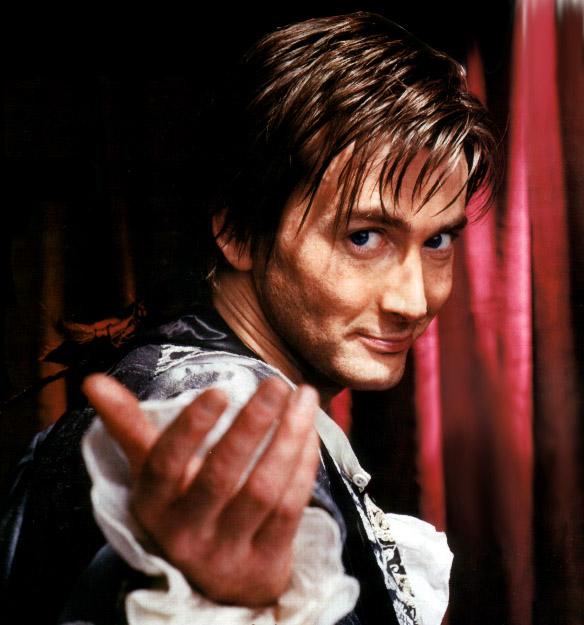 I spent more time than I ought to have today watching a 2005 BBC production of Casanova. David Tennant, of Doctor Who fame, played the world's most famous lover. The chronicle of his youthful exploits was delightful, but it was the frame narrative that really made the mini-series worth watching. Peter O'Toole plays Casanova in his old age, withered and spent. Amidst all his lovers and all his conquests, O'Toole's Casanova ends his life alone and almost forgotten.
In the BBC production, Casanova's actions revolve around Henriette, his one great love, and his inability to ever be with her. The one that got away. The one woman whom he loves too much to seduce. His whole being revolves around her. No matter how many terrible choices he makes, his love for her stands out as the redeeming quality of his life. His enduring, unrequited love, destined never to be fulfilled.
Henriette loves him, too, but craves a life of stability and prosperity. She once vowed to herself she would never live in poverty again, as she had in early life, nor raise children in an unstable environment. For her own sake, and for the sake of her children, she chooses stability over love.
A few days ago, I posted about how irrevocably linked I already am to Adam. From that standpoint, Casanova's struggles become gut-wrenching. I can't imagine a life of constantly reaching out for Adam, barely missing him. Worse yet, I can't imagine Henriette's life--a marriage of convenience to a man she doesn't love, always wishing she could have been with another.
What would life be like, spending it without the one I love, my soul mate? How would my life change if Adam and I weren't set up to be independent? Could I always choose Adam over every other thing? What would happen to me, to us, if I couldn't? These are the questions Casanova forced me to ask myself.
But I don't think those questions give me enough credit. I know what I would choose. I would choose a life of poverty over a life without Adam, hands down. A life of scandal and a life of hardship, too. I could never choose the kind of tragic life Henriette chooses for herself, and for Casanova. I don't think there is anything on this earth more important to me than love, and unity, with Adam. I think that's the way marriage is supposed to work, isn't it?
Wednesday, April 22, 2009
Revolutionary Road
Although I have many happy things to write about from my vacation (including my first dress fitting) and my trip to DC with Adam (including our first meeting with the priest, an Engagement Encounter weekend, and apartment shopping), I find that it's always easiest to write what's fresh. And I have something slightly less sunny on my mind.
Revolutionary Road reunites Kate Winslet and Leonardo DiCaprio in a dark sketch of married life. DiCaprio plays a disillusioned thirty-year old working in a job he hates to support the family he has been compelled--half by his own desire and half by social pressure--to start. Winslet matches him as an independent-minded woman trapped into the life of a suburban housewife that she never wanted. Though the film tends to be somewhat over-the-top and self-indulgent, it encapsulated some of my darkest fears about marriage after the silver plate has tarnished.
DiCaprio's character is a man who has never found his vocation. He suffers through his desk job to support his family. But he doesn't daydream of life as a writer, or an actor, or a teacher--he doesn't have that luxury. Because he has never taken the time to find his vocation, he doesn't even know what to dream for. This gapping hole in his life leaves him undamentally unhappy, emasculated, and unable to love his wife the way he ought.
Winslet's character has dreams of her own. She still pursues them, choosing to act in local theater even after moving down to the suburbs for their children. For her, its less that her own life is unfulifilled than that her husband's is. They can't be anything is he isn't anything. As he loses respect for himself, she begins to question his masculinity and lose her respect for him. The more he resentfully rebuffs her efforts to help him find his vocation, the more estranged their marriage becomes and the further she drifts from sanity.
The real tragedy of the film is how alone the couple is in their search for meaning. Other characters are fundamentally incapable of understanding the couple's complaint. Friends look at them with skeptical astonishment when they discuss their schemes to find something better in life. DiCaprio's co-worker waves his arms, gesticulating, about DiCaprio quitting his job to find his "vocation." In the end, the only man who recognizes the horror of the couple's lifestyle is the mad son of a neighbor. In the world of Revolutionary Road, only the insane look for meaning.
Winslet's character truly thought that he life was going to be special. Not that she was going to be rich or famous, but that her life would mean something to her and to those around her. It drives her slowly mad to watch the man she loves failing to live up to his purpose. Neither of them answer their callings; it ruins their marriage and their lives.
I'd be lying to myself if I denied how much I identify with Winslet's character, or at least the way I imagine her to be when she and DiCaprio's character first married. I, too, occassionally wonder whether I will feel trapped in the life I've chosen. I worry that Adam would choose a life he hated if that was the only way to support me, rather than allowing me to make whatever sacrifice is necessary to help him find and fulfill his vocation.
The mental image is difficult to sustain. Adam is absolutely wonderful. We have a strong vision of what it is we want in life. We've communicated with each other about it and are both prepared to do what it takes to get there. We think we're on the track of God's vocation for our lives. And, in all honesty, I think we are pretty special. But, in the dead of night, I sometimes wonder with Winslet: will my life always have meaning?
Revolutionary Road reunites Kate Winslet and Leonardo DiCaprio in a dark sketch of married life. DiCaprio plays a disillusioned thirty-year old working in a job he hates to support the family he has been compelled--half by his own desire and half by social pressure--to start. Winslet matches him as an independent-minded woman trapped into the life of a suburban housewife that she never wanted. Though the film tends to be somewhat over-the-top and self-indulgent, it encapsulated some of my darkest fears about marriage after the silver plate has tarnished.
DiCaprio's character is a man who has never found his vocation. He suffers through his desk job to support his family. But he doesn't daydream of life as a writer, or an actor, or a teacher--he doesn't have that luxury. Because he has never taken the time to find his vocation, he doesn't even know what to dream for. This gapping hole in his life leaves him undamentally unhappy, emasculated, and unable to love his wife the way he ought.
Winslet's character has dreams of her own. She still pursues them, choosing to act in local theater even after moving down to the suburbs for their children. For her, its less that her own life is unfulifilled than that her husband's is. They can't be anything is he isn't anything. As he loses respect for himself, she begins to question his masculinity and lose her respect for him. The more he resentfully rebuffs her efforts to help him find his vocation, the more estranged their marriage becomes and the further she drifts from sanity.
The real tragedy of the film is how alone the couple is in their search for meaning. Other characters are fundamentally incapable of understanding the couple's complaint. Friends look at them with skeptical astonishment when they discuss their schemes to find something better in life. DiCaprio's co-worker waves his arms, gesticulating, about DiCaprio quitting his job to find his "vocation." In the end, the only man who recognizes the horror of the couple's lifestyle is the mad son of a neighbor. In the world of Revolutionary Road, only the insane look for meaning.
Winslet's character truly thought that he life was going to be special. Not that she was going to be rich or famous, but that her life would mean something to her and to those around her. It drives her slowly mad to watch the man she loves failing to live up to his purpose. Neither of them answer their callings; it ruins their marriage and their lives.
I'd be lying to myself if I denied how much I identify with Winslet's character, or at least the way I imagine her to be when she and DiCaprio's character first married. I, too, occassionally wonder whether I will feel trapped in the life I've chosen. I worry that Adam would choose a life he hated if that was the only way to support me, rather than allowing me to make whatever sacrifice is necessary to help him find and fulfill his vocation.
The mental image is difficult to sustain. Adam is absolutely wonderful. We have a strong vision of what it is we want in life. We've communicated with each other about it and are both prepared to do what it takes to get there. We think we're on the track of God's vocation for our lives. And, in all honesty, I think we are pretty special. But, in the dead of night, I sometimes wonder with Winslet: will my life always have meaning?
Friday, April 3, 2009
A Love for All Ages
I try very hard to admit when I'm wrong. I was wrong to condemn Twilight outright. I'll stick to my guns about how wildly inappropriate it is for the reader of its usual demographic, but, for me, the four-novel saga has been eye-opening.
Traditionally, good literature doesn't tell the reader anything more than it has to. It shows the reader. We all recognize that the best kinds of learning come from experience, so it only makes sense that the structure of a narrative does more for the reader than narration itself does. So often, novels that tell the reader outright what the characters are thinking and what their actions mean are just poorly written.
Just imagine, though, a novel writer who completely absorbs the reader in one character's mind. Every minute detail of every perception presented to for the reader's consideration. Every nuance of every decision spelled out for the reader to process. And every sensation of every sense cataloged for the reader to experience. It's a different kind of reading. Not learning by watching, which works so well in the best of novels, or learning by hearing, which ruins so much popular fiction. It's learning by being, by becoming a character within the novel in a very visceral way.
That is why the Twilight novels have meant so much to me in the five short days during which I have finished them. I have become a character hopelessly in love with the perfect man. I have been personally shocked, again, that the perfect man could ever love me. My own heart has beat, my own senses have been aroused, by the mere thought of the man I love. And I, myself, have again been forced to recognize the powerful love which binds us--not just me to him, but him to me.
Twilight hasn't made me enter into Bella Swan's world. Her world has been pressed onto mine, giving me a new clarity of perception about my own life through the oddly fitting analogy between her life and mine. I feel really changed, altered, in a way only writers like Alcott, Dickens, or Stevenson have left me. Bella Swan's tale might not be told as well as Jo March's, but she, too, has become part of the way I perceive myself. I see myself--my weakness and my really quite remarkable strengths--in a new light as something to appreciate. I am different, special, with things I will always do poorly and others I will always do well. And Adam, my perfect match, fits me like a key, his own liabilities and assets working with mine in a truly extraordinary way.
More than that, though, the mastery of Stephanie Meyer's portrayal of the love between Bella and Edward means that, in my eyes at least, Adam is altered, too.
As though I've been turned into a vampire myself, my feelings toward Adam are all heightened and intensified. I feel the physical distance between us in a way I never had before, a physical need to be with my other half greater than any I've ever known. I want him in a way I've never really allowed myself to before, in a way that makes me even more impatient for August. And I may even love him in a way I never have before: Twilight has given me a new vocabulary, a new framework for looking at how and why I will love him for the rest of my existence.
I've penned the words and I feel more at peace. I'm sure the heightened emotions will quiet themselves into something more sustainable, and healthy, as the venom of Meyer's novels works its way out of my system. But Bella Swan has been imprinted into my mind, into the way I see myself. I hope that--and our shared love and desire for our perfect lovers--will never completely fade.
Traditionally, good literature doesn't tell the reader anything more than it has to. It shows the reader. We all recognize that the best kinds of learning come from experience, so it only makes sense that the structure of a narrative does more for the reader than narration itself does. So often, novels that tell the reader outright what the characters are thinking and what their actions mean are just poorly written.
Just imagine, though, a novel writer who completely absorbs the reader in one character's mind. Every minute detail of every perception presented to for the reader's consideration. Every nuance of every decision spelled out for the reader to process. And every sensation of every sense cataloged for the reader to experience. It's a different kind of reading. Not learning by watching, which works so well in the best of novels, or learning by hearing, which ruins so much popular fiction. It's learning by being, by becoming a character within the novel in a very visceral way.
That is why the Twilight novels have meant so much to me in the five short days during which I have finished them. I have become a character hopelessly in love with the perfect man. I have been personally shocked, again, that the perfect man could ever love me. My own heart has beat, my own senses have been aroused, by the mere thought of the man I love. And I, myself, have again been forced to recognize the powerful love which binds us--not just me to him, but him to me.
Twilight hasn't made me enter into Bella Swan's world. Her world has been pressed onto mine, giving me a new clarity of perception about my own life through the oddly fitting analogy between her life and mine. I feel really changed, altered, in a way only writers like Alcott, Dickens, or Stevenson have left me. Bella Swan's tale might not be told as well as Jo March's, but she, too, has become part of the way I perceive myself. I see myself--my weakness and my really quite remarkable strengths--in a new light as something to appreciate. I am different, special, with things I will always do poorly and others I will always do well. And Adam, my perfect match, fits me like a key, his own liabilities and assets working with mine in a truly extraordinary way.
More than that, though, the mastery of Stephanie Meyer's portrayal of the love between Bella and Edward means that, in my eyes at least, Adam is altered, too.
As though I've been turned into a vampire myself, my feelings toward Adam are all heightened and intensified. I feel the physical distance between us in a way I never had before, a physical need to be with my other half greater than any I've ever known. I want him in a way I've never really allowed myself to before, in a way that makes me even more impatient for August. And I may even love him in a way I never have before: Twilight has given me a new vocabulary, a new framework for looking at how and why I will love him for the rest of my existence.
I've penned the words and I feel more at peace. I'm sure the heightened emotions will quiet themselves into something more sustainable, and healthy, as the venom of Meyer's novels works its way out of my system. But Bella Swan has been imprinted into my mind, into the way I see myself. I hope that--and our shared love and desire for our perfect lovers--will never completely fade.
Saturday, March 21, 2009
TARDIS: The Choice
Growing up, I wanted nothing more than to be a part of something great. I dreamed about the day I could save someone's life, discover something new, change the world. So, like generations before me, I read fantasy and watched sci-fi. But the books and films weren't cathartic: experiencing them, becoming involved in their worlds, was physically painful. I wanted so much to do something important. And it never seemed like I did.
If you read my other blog, I'm sure you've picked up on my most recent sci-fi obsession: Doctor Who. It's a show about normal--painfully normal--people who take up 'traveling' with an alien genius who takes them through space and time to change history and save lives. His 'companions' come and go, individuals given the once-in-a-billion-lifetimes choice whether to see the universe with the Doctor on his ship, the TARDIS, or to stay safely at home. I can imagine myself, as a teenager, praying for that choice, praying that my life wouldn't be "normal."
The thing is, my life isn't normal. It's amazing. It's full of people who love me, a community of support and dependency. I'm not normal, either. I'm equipped to live an extraordinary life and, best of all, have a fiance ready and excited to share it with me. For the first time in my life, I think I would say "No" to the Doctor.
I know I go on and on about vocation, especially for someone too young to really know much about it. But my life with Adam seems so exciting, so full of promise. Teaching, writing, making love, making lunches, hosting crafternoons, singing musicals with friends--all these things, now, seem so important. My vocation isn't, I think, to change the world in a revolutionary way. But I hope it is to live a revolutionary life of happiness and simplicity. As bizarre, maybe even cowardly, as it seems to me to say this, I'll take that life with Adam over traveling with the Doctor any day.
You can read more about my minor Doctor Who obsession here and here.
If you read my other blog, I'm sure you've picked up on my most recent sci-fi obsession: Doctor Who. It's a show about normal--painfully normal--people who take up 'traveling' with an alien genius who takes them through space and time to change history and save lives. His 'companions' come and go, individuals given the once-in-a-billion-lifetimes choice whether to see the universe with the Doctor on his ship, the TARDIS, or to stay safely at home. I can imagine myself, as a teenager, praying for that choice, praying that my life wouldn't be "normal."
The thing is, my life isn't normal. It's amazing. It's full of people who love me, a community of support and dependency. I'm not normal, either. I'm equipped to live an extraordinary life and, best of all, have a fiance ready and excited to share it with me. For the first time in my life, I think I would say "No" to the Doctor.
I know I go on and on about vocation, especially for someone too young to really know much about it. But my life with Adam seems so exciting, so full of promise. Teaching, writing, making love, making lunches, hosting crafternoons, singing musicals with friends--all these things, now, seem so important. My vocation isn't, I think, to change the world in a revolutionary way. But I hope it is to live a revolutionary life of happiness and simplicity. As bizarre, maybe even cowardly, as it seems to me to say this, I'll take that life with Adam over traveling with the Doctor any day.
You can read more about my minor Doctor Who obsession here and here.
Sunday, March 8, 2009
Waiting...
Most literally, an engagement is "an arrangement to meet or be present at a specified time and place." But right now, in England, that time--August--far away and that place--the US--isn't even visible on the horizon. Most of the time, I'm grateful to have many months to prepare myself spiritually, emotionally, and physically to marry Adam. Still, there are days when it feels like the day will never come.
I have to confess that this week, with papers worth half of my degree looming, my marriage to Adam seems impossibly distant. It's difficult to see past the deadline, now only three weeks away, to the happy day I marry Adam. Perhaps this is just another moment when I must remember life doesn't stop just because I'm engaged...
I have to confess that this week, with papers worth half of my degree looming, my marriage to Adam seems impossibly distant. It's difficult to see past the deadline, now only three weeks away, to the happy day I marry Adam. Perhaps this is just another moment when I must remember life doesn't stop just because I'm engaged...
Monday, March 2, 2009
Vocation
One of the greatest blessings of my conversion to Catholicism has been learning about the idea of vocation. In modern usage, a vocation is usually another word for job. But the word comes from the Latin "vocare," to call--a vocation is literally a calling from God.
I assume that I will eventually want to post about my vocation to marriage, but that isn't what's on my mind tonight. Tonight I want to think about vocations in the here and now. Long term, (I think) God is calling me to marriage, family, teaching, and maybe writing. Where does that leave me, an engaged graduate student pursuing my own studies thousands of miles away from my family?
Graduate study in insular enough that it encourages a kind of self-focus. It's really no ones fault, just the nature of spending hours a day focused deeply on an obscure topic. Life becomes about your thoughts, your research--it really has to, or no one could contribute anything to greater human understanding.
But that doesn't mean life as a graduate isn't often sickeningly lonely. And not in the way people normally think.
Universities normally pack graduate calendars with events and load up on counselors to combat graduate depression. We're supposed to be lonely because we spend all day in the library, isolated from our peers. Perhaps that's part of the problem, but I don't think it's the origin of the malaise. I think the real problem is that, for so many of us, we're in a bit of a holding pattern--we have a vocation, but we aren't doing it.
Of course, that realization doesn't make finishing my degree any less important. It's part of the preparation for my vocation, preparing me to be a better teacher and writer. The answer can't be to drop out and come home. Instead, I need to adjust my way of thinking--my studies are to prepare me to answer my calling. It's all a part of God's plan for my life, which I should enjoy here and now, as it comes. "Bride Alison" needs to learn to love "Student Alison" for what "Student Alison" is equipping her to be.
I assume that I will eventually want to post about my vocation to marriage, but that isn't what's on my mind tonight. Tonight I want to think about vocations in the here and now. Long term, (I think) God is calling me to marriage, family, teaching, and maybe writing. Where does that leave me, an engaged graduate student pursuing my own studies thousands of miles away from my family?
Graduate study in insular enough that it encourages a kind of self-focus. It's really no ones fault, just the nature of spending hours a day focused deeply on an obscure topic. Life becomes about your thoughts, your research--it really has to, or no one could contribute anything to greater human understanding.
But that doesn't mean life as a graduate isn't often sickeningly lonely. And not in the way people normally think.
Universities normally pack graduate calendars with events and load up on counselors to combat graduate depression. We're supposed to be lonely because we spend all day in the library, isolated from our peers. Perhaps that's part of the problem, but I don't think it's the origin of the malaise. I think the real problem is that, for so many of us, we're in a bit of a holding pattern--we have a vocation, but we aren't doing it.
Of course, that realization doesn't make finishing my degree any less important. It's part of the preparation for my vocation, preparing me to be a better teacher and writer. The answer can't be to drop out and come home. Instead, I need to adjust my way of thinking--my studies are to prepare me to answer my calling. It's all a part of God's plan for my life, which I should enjoy here and now, as it comes. "Bride Alison" needs to learn to love "Student Alison" for what "Student Alison" is equipping her to be.
Subscribe to:
Posts (Atom)